Thrillers
Unanimous
Not saying no isn't the same as saying yes
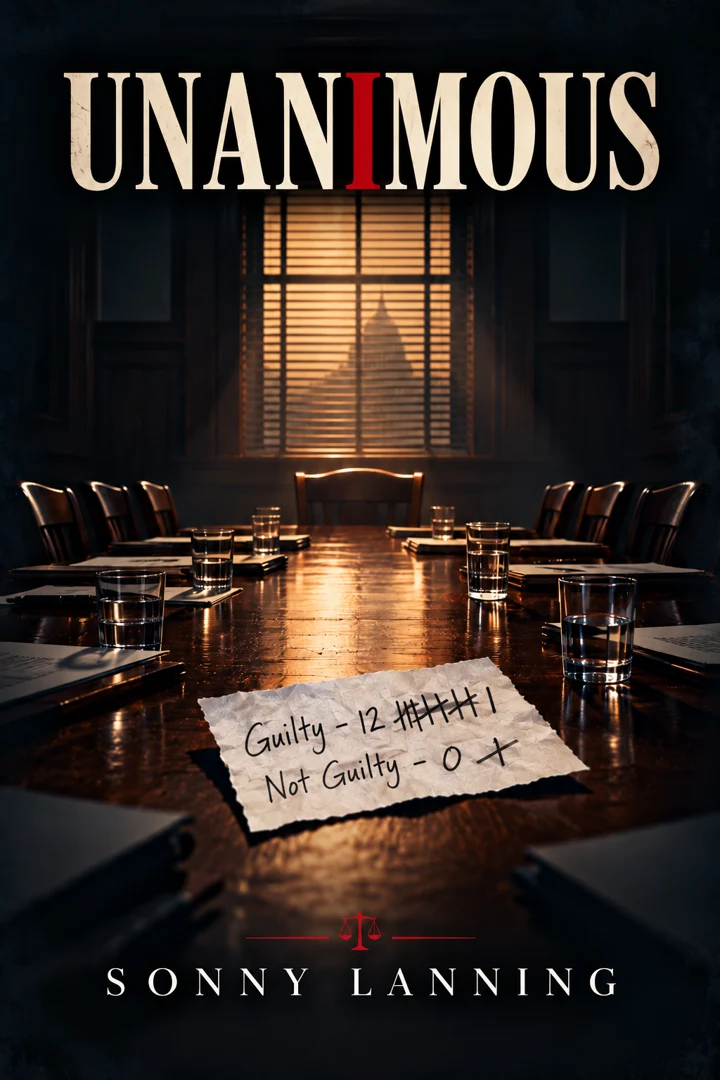
Laura Finch believed the government's murder case had not been proved beyond reasonable doubt. The Seattle defence lawyer loses anyway. Twelve jurors return a unanimous guilty verdict, providing the clear conclusion a trial is designed to produce. Disappointment is familiar territory for a lawyer. What follows is not. A juror tells her that they never all voted guilty.
The claim challenges the most basic account of what happened in the jury room. If the verdict did not reflect a unanimous decision, Laura needs to understand how it came to stand as one. The question reaches beyond disagreement about the evidence. It concerns the process that turned twelve people into a single answer, and the confidence everyone outside was expected to place in it.
Laura begins reconstructing the deliberations, the selection of the jury and the work of a consultant she trusted. Choices that appeared to serve a legitimate trial acquire a different significance when viewed through the possibility of a result arranged in advance. Each part of the process must be examined for what it contributed to the outcome, rather than accepted simply because it belonged to the usual procedure.
The verdict begins to look engineered. Somewhere behind the twelve people in the jury room is a conspiracy that needed one man convicted and needed the case to end with him. For Laura, reopening what appeared settled means confronting both the work of others and decisions in which she placed her own confidence. Trust has become part of the evidence she must reassess.
Unanimous is a legal thriller about the authority of an agreed result and the possibility that agreement can be manufactured. Laura must discover how the official account departed from what the jurors actually decided. Her client's fate rests on a word that seemed beyond dispute—until one of the people who supplied it said it was never true.
Ebook purchase link coming soon.